Pain ratings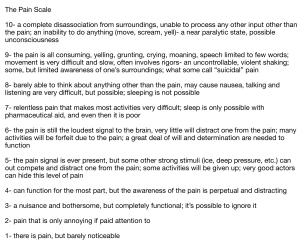
Compartment syndrome/CRPS= 9
Comminuted ulnar fracture= 8
Post-fasciotomy= 9
Split-thickness skin graft= 5
8-26-2009: The Shattering Moment
I had been commuting by bike to work several times per week since 2005—13 miles each way. Over the years, traffic had become increasingly aggressive and dangerous, so I had recently begun taking a more convoluted route along quieter, lower-traffic neighborhood roads. It was on one such road, early on a Wednesday morning, when I felt particularly strong, ready to conquer the world.
That Sunday, I was scheduled to compete in the Arizona State Championship Team Time Trial. I remember thinking, “I’m ready for this.” But that was the last clear thought I had before everything changed.
The next memory I have is waking up in a hospital, a police officer leaning over me, asking, “How long are you visiting from Iowa?” Confused, I wondered why I was there—and Iowa?
It turned out that an extermination truck—an ironic twist—had made a sudden left turn directly into me, sending me flying through the air some 25 to 30 feet. I was knocked unconscious, with a shattered elbow, two broken ribs, and worst of all, a subdural hematoma (brain bleed).
When I arrived at the hospital, I was semi-lucid but unable to process much. I couldn’t recall my current address, instead giving the hospital staff the address from my high school days—20 years earlier. I still only have a vague, dream-like recollection of flying through the air. I don’t remember being hit, nor the place where it happened.
The doctors focused on my brain first. Over the next hours, I lost count of the CT scans of my head. During one scan, the power went out, plunging me into darkness inside the imaging tube. That was the only time I hit the panic button they give you when you’re in the tube, but the button didn’t work because of the power outage. It was terrifying, but somehow, the brain bleed stabilized fairly quickly. Still, that first day was hazy, and I don’t recall the conversation when I called my office manager to say I wouldn’t be in, but “I’ll be back tomorrow.”
The Battle to Save My Arm
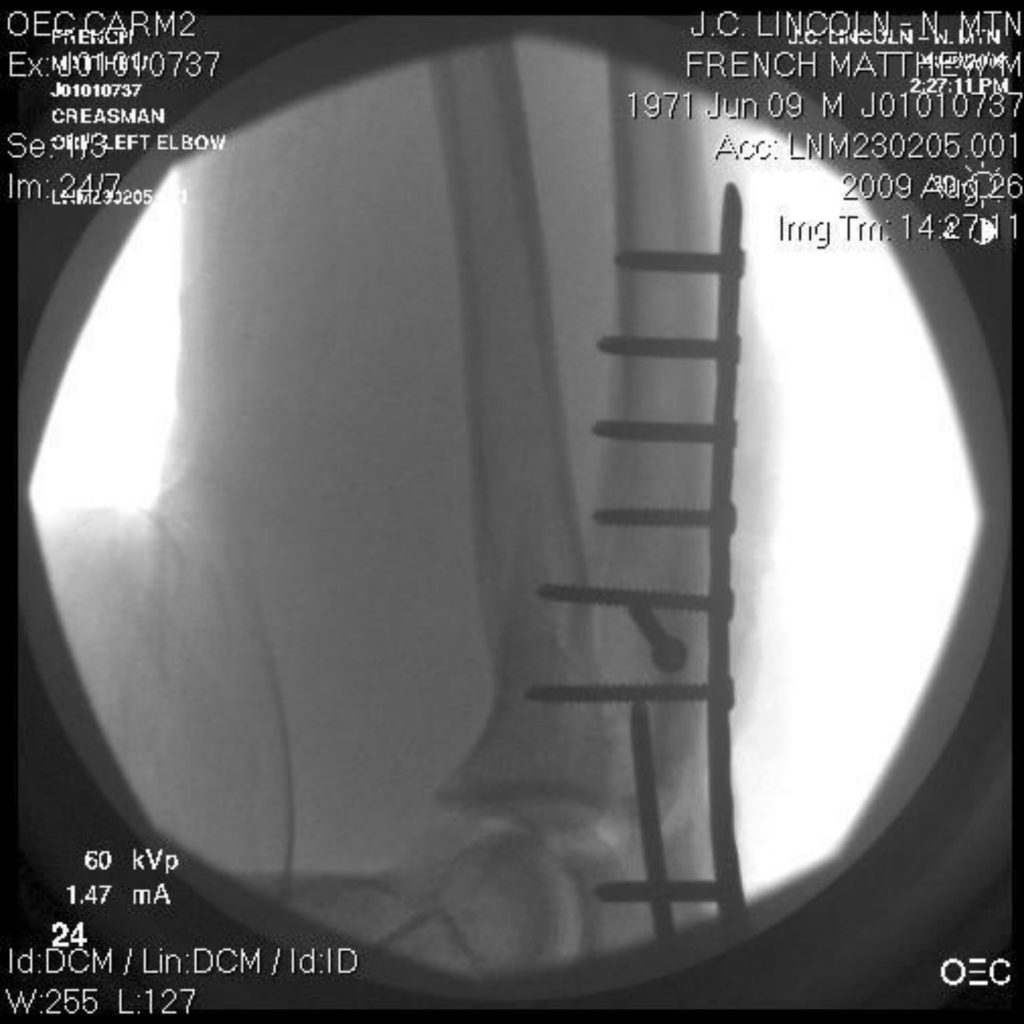
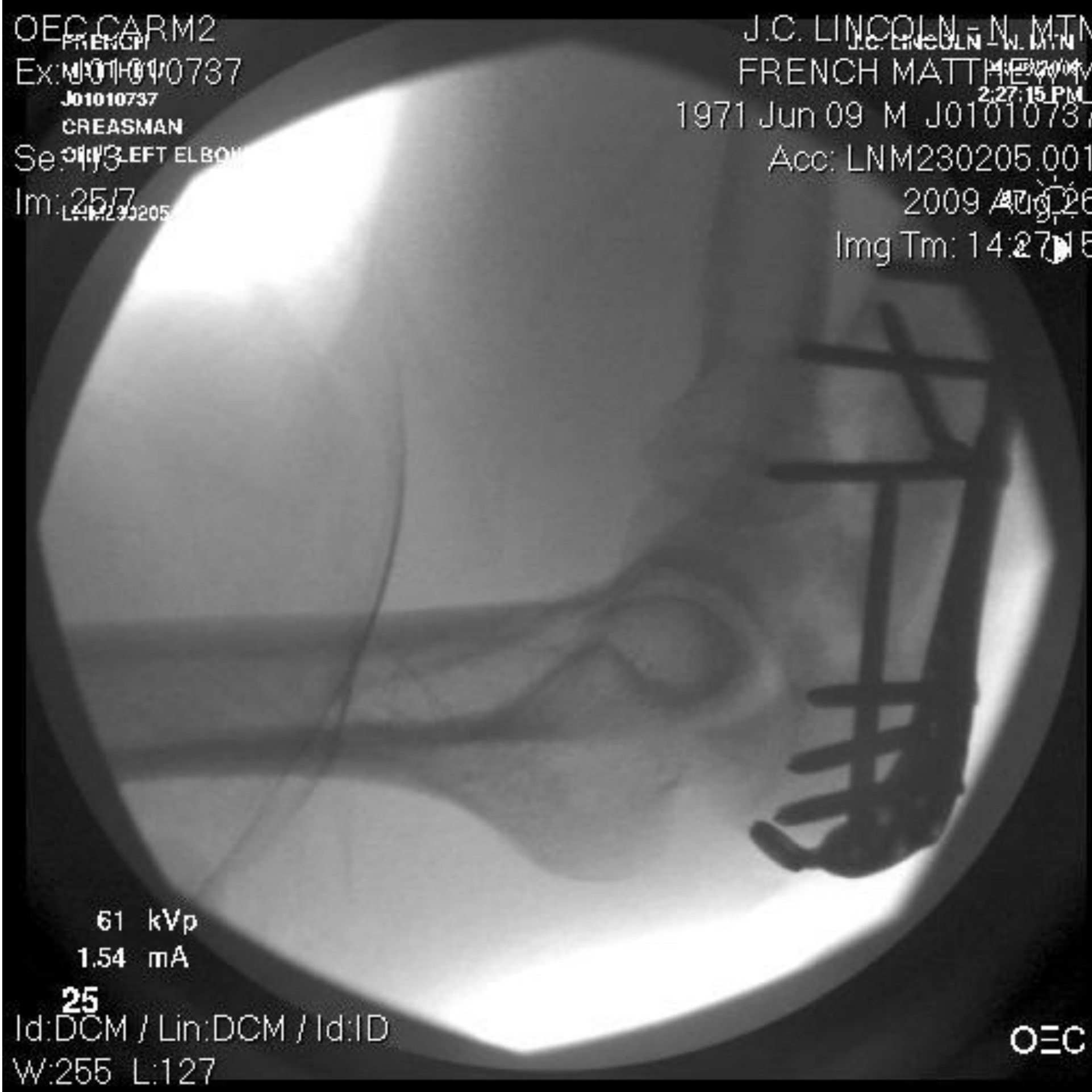
My shattered left elbow became the next immediate concern. The doctors determined that surgery was needed as soon as possible. Later that day, they inserted a plate and 11 screws to hold the multiple broken pieces of bone together.
But my pain didn’t end with the surgery. My left hand felt like it was being held in a campfire—intense, searing pain that wouldn’t subside. It felt like the “Box” in the movie Dune, where the main character had to place his hand into a painful test.
When my hand was examined, it had no feeling and was paralyzed, yet the burning pain was unlike anything I had ever felt. No amount of morphine could extinguish it.
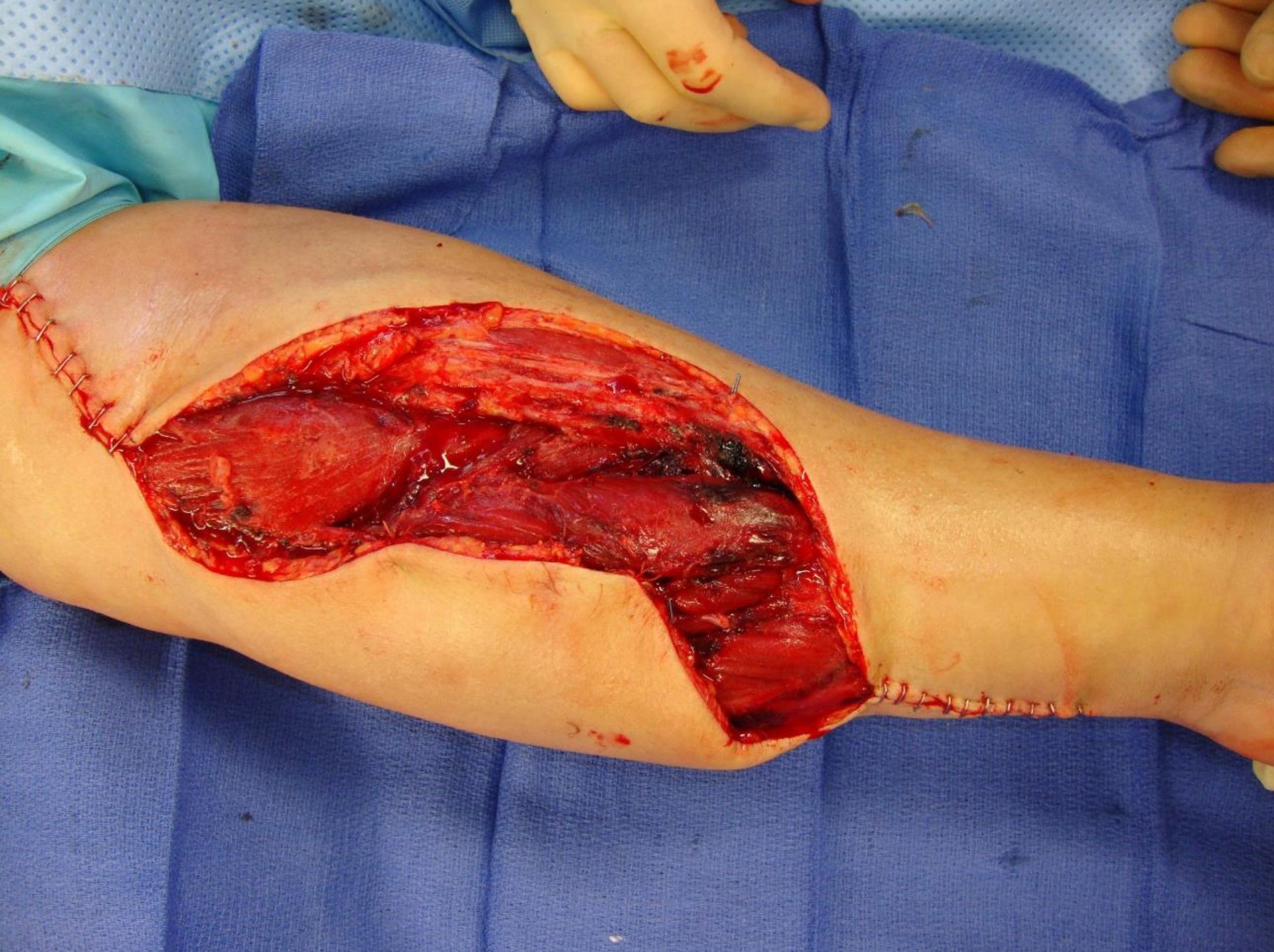
The orthopedic surgeon called in a hand specialist, who proceeded to shove what looked like a meat thermometer into the muscle of my forearm. The hand pain was so excruciating, I barely noticed it. The device was called a Wick catheter, used to measure the pressure inside the muscle. The surgeon confirmed that I had acute compartment syndrome, a life-threatening condition that results when inflammation builds up in the muscle, cutting off blood flow and crushing nerves. Without surgery, the muscles and nerves in my forearm would die, leading to Volkmann’s Contracture—a permanent flexion deformity of the wrist and fingers.
The clock was ticking. That night, I underwent surgery #2: a forearm fasciotomy, in which the fascia surrounding each flexor muscle in my forearm was filleted open and left to drain overnight. That night with my eyes closed I eavesdropped on my surgeon speaking with a nurse. “This guy is going to be in some serious pain tonight. He’s in excellent shape, so you can give him whatever he needs for the pain. His body should be able to handle it.” Worst lullaby ever.
8-27-2009: The Saw
That night, in the haze of pain and drugs, I dreamed I was in something akin to a Saw movie, with a sadistic torturer scraping a rusty saw blade sideways up and down my forearm while laughing maniacally. But when I woke up, the pain was real. I hit the call button in a frenzy, and the nurse responded by pumping me full of a pain-killing cocktail.
Thirteen hours after the fasciotomy, it was time for surgery #3—to sew up the wounds. When my surgeon unwrapped my arm, he exclaimed that it looked as though a grenade had exploded from the inside out. He later remarked, it was one of those exceptional cases that he felt needed the photo. They realized there was no way to stitch it back together. So, they resorted to a skin graft, using a device much like an apple peeler to remove skin from my thigh and graft it onto my forearm.
8-28-2009: The Burning Pain
The next day, to the surprise of the surgeon, my burning hand pain did not relent. I later learned that my continuing burning hand pain was due to Reflex Sympathetic Dystrophy (RSD), now known as Chronic Regional Pain Syndrome (CRPS). For reasons that aren’t entirely understood, some individuals develop this condition after injury, where the nerve in the affected limb goes haywire, ramping up pain signals to maximum intensity while also causing the limb to sweat, swell, change color, and become paralyzed. I would literally have a pond of sweat in my palm in moments.
On that day, I was transferred out of the ICU to a standard room, where I met a new roommate who seemed to love rap music. He left the BET station on full volume all night long. I called the nurse and asked her to turn it off or at least down. She only offered me foam ear plugs. I really wanted to go home.
8-29/30-2009: The Struggle to Go Home
I got my room mate’s story the next day, and was able to get him to turn off his TV at night. This was a sad situation. He was from south Chicago and had been studying at the local motorcycle mechanic school. While walking to school he was hit by a truck, and bored and frustrated, he had been in this hospital for nearly a month. He had lost the use of his legs, and his parents were desperately trying to pull together enough funds to come see him and help get him back home. A lot of us get hit by trucks here. This brought some sobering perspective to my own ordeals.
I was desperate to go home. I wanted to leave that hospital—those walls, the noise, the pain. When I asked to leave, I was told I needed permission from my “supervising” doctor. Hours later, a doctor I had never met came in, listing the tasks I needed to complete before being discharged. I quickly did all of them: got up, walked 10 steps, used the bathroom. Reluctantly, he gave me the go-ahead. Little did I know, the nightmare that awaited me.
8-30-2009: The Hell of Pain at Home
That night at home was absolute torture. The doctor had sent me home with mild pain pills—5 mg hydrocodone, a fraction of the strength morphine while the dilaudid I had been on was 8-fold stronger than morphine. As the powerful dilaudid wore off, the burning pain in my hand returned with a vengeance, worse than before. I couldn’t sleep a single minute that night. My wife and I had an argument, torn between going back to the hospital or trying to tough it out. I refused to return. That morning, we called the supervising doctor, and were told he would return our call. Hours passed. We then reached out to the orthopedic surgeon who had worked on my elbow, and within 30 minutes, he arranged for a prescription of 10 mg oxycodone, which finally made the pain bearable enough for me to sleep.
When the supervising doctor finally called the next day, he arrogantly said, “See, I told you your pain wasn’t yet managed well enough.” It seemed he under-prescribed the pain medication just to prove a point.
9-01-2009: Childbirth Moment
In addition to the physical trauma, the combination of limited eating, heavy opiates, and anesthesia from three surgeries caused severe constipation. I had not gone to the bathroom since before the collision, and the effort to relieve myself was so intense, it felt like the closest thing to childbirth a man might experience. (Though, I’ll admit, it’s not as wide as a newborn’s skull!)
The Recovery: A Long Road
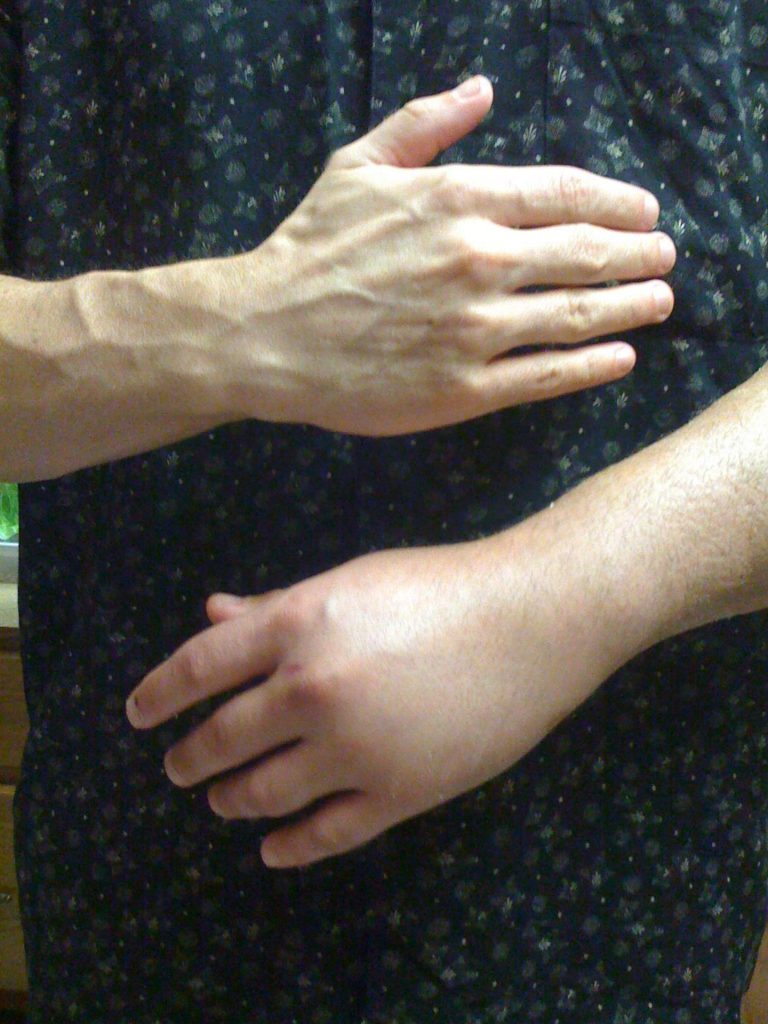
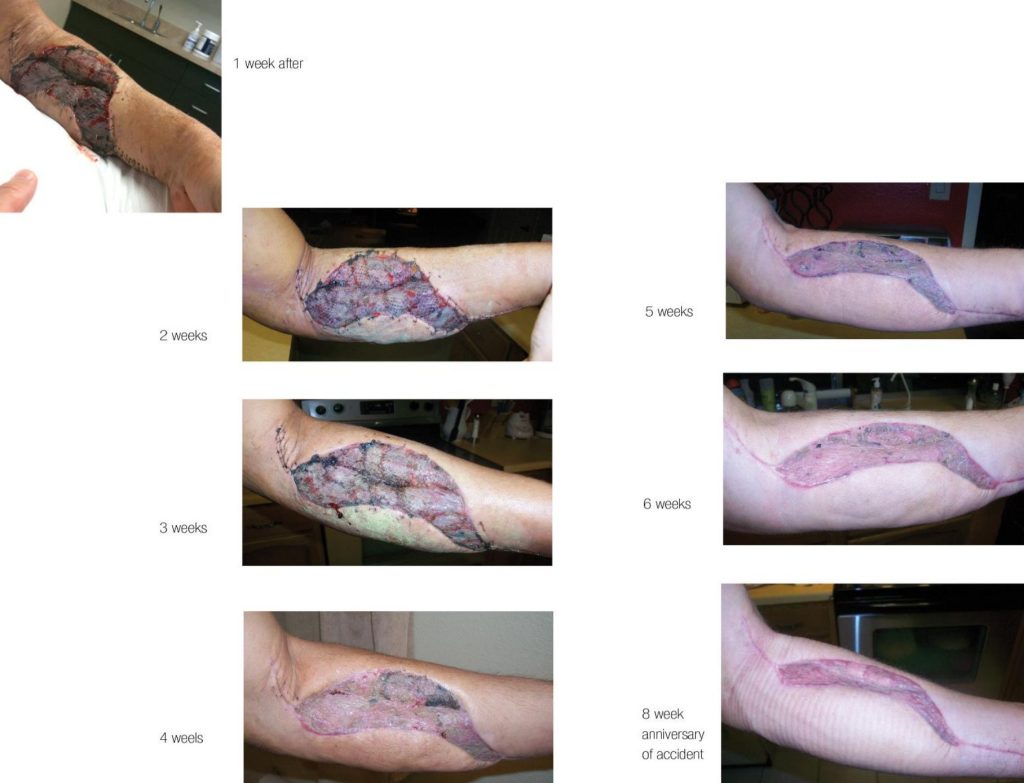
When my forearm was unwrapped a week later, I first saw how grotesque it was. The wound care, from both the forearm and the thigh donor site, was a tedious and gruesome process that my wife took on with remarkable patience. Over the next 8 weeks, we documented the healing process with photos.
By my final visit with the hand surgeon, he was so impressed with my recovery that he called in a group of 20 doctors and residents to see how quickly I had healed. “It’s unbelievable!” he exclaimed.
After 4 weeks, I could make a fist again. The nerve pain gradually subsided over the next 3 months, and after months of painful elbow physical therapy, I regained 95% of my elbow extension, defying the doctor’s initial prognosis. I was left with a permanent muted feeling, like wearing a surgical glove, in my thumb and first 2 fingers.
Returning to Work
After six weeks out of work, my practice had dropped by 60%. Financial pressures mounted as I faced mounting medical bills. In week 7, I defied doctor’s orders and returned to work. The nerve pain in my hand had eased, but the elbow pain took center stage, waking me up several times each night. I wore a bone growth stimulator for my elbow, hoping to heal a non-union fracture. It was cumbersome with a large battery pack on my belt connected by a cord to an elbow brace. After 1,312 hours with the device, it worked.
10/04/2010: Another Surgery
For over a year the elbow pain persisted, still waking me several times every night. I sought another surgeon who performed a procedure to remove the hardware in my elbow. She found bone spurs and removed them, and after more painful therapy, the pain subsided significantly, though not completely. Ironically, after another elbow fracture 4 years later, the pain vanished almost completely.
Some lessons/advice
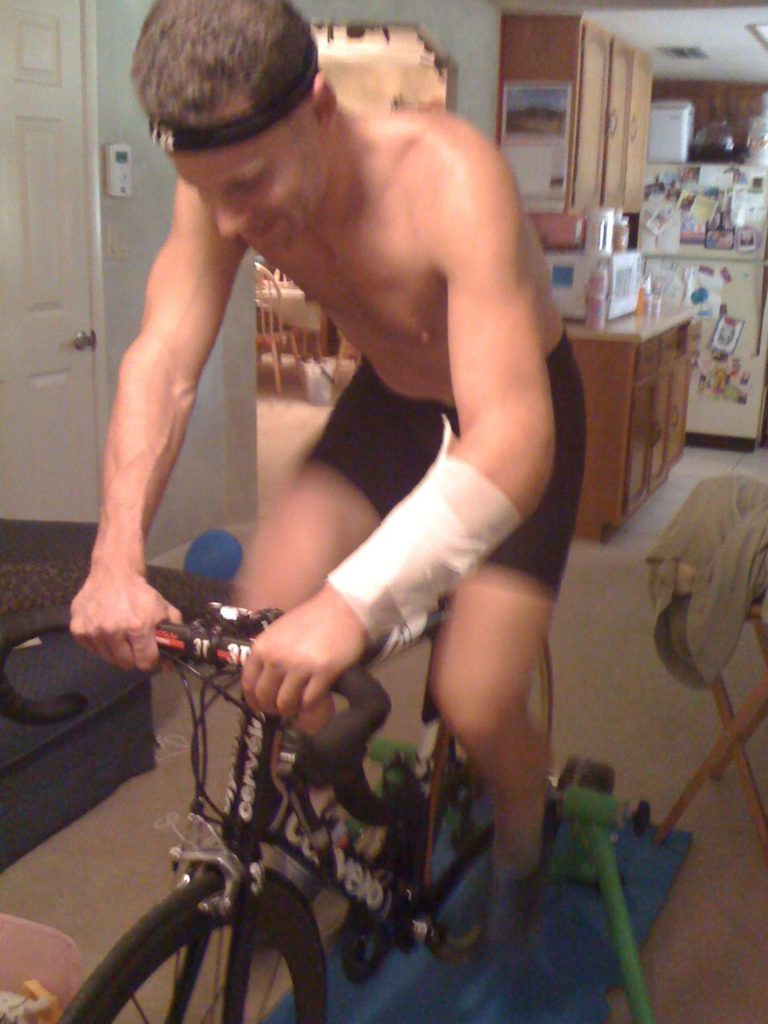
- For nerve pain, don’t give up trying to find what works for you. Nerve pain is horrible, and pharmacology barely touches it. Try other types of stimuli to the nerve to try and down-regulate the pain signal. For my hand, putting on a solid ice pack helped some. On 9-18-09, I crawled onto my indoor bike with my paralyzed, numb, yet burning hand resting on the handlebar. Spinning my legs and elevating the heart rate brought tremendous relief. I suspect it was from improving blood flow and oxygen delivery.
Confirm your surgeon is in-network. This can be hard to do when you’re in ICU, so an important message for your advocate. The hand specialist surgeon was not in any insurance
 network, and I had to pay the difference between what my insurance paid him, plus his full charges which amounted to $16,000.
- Hyperbaric oxygen for wound healing and concussion. I did a course of this early in my recovery for the skin graft wounds. Since that time, we have learned the benefits of this treatment for traumatic brain injuries, so I unknowingly benefitted there as well.
- Take care of yourself and strive for a high vO2 max. The healthier your body is, the better it
 takes care of you when you need it to.
 My orthopedic surgeon, with many years of experience, made an interesting comment on my follow-up visit. “You are healing so fast. I have put together every type of person and athlete over the years, and there’s something about the bicyclists. They heal the fastest.” VO2 max is an accurate marker of one’s cardiovascular fitness, and has been identified as the most accurate predictor of longevity. Research shows a direct correlation between recovery times from major surgery and level of vO2 max. So do your cardio!